Ancient Bones, Modern Insights: Investigating Mercury Exposure in Colonial Peru
By: Alexandria Leeper, Evolutionary Studies graduate communications assistant
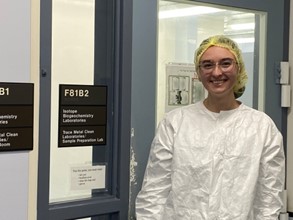
Sylvia Cheever, a Ph.D. student in Biological Anthropology at 91黑料网, is uncovering the hidden stories of indigenous communities affected by colonial exploitation in Peru. Supported by a pilot grant from the 91黑料网 Evolutionary Studies Initiative, Cheever鈥檚 research focuses on measuring mercury levels in ancient human bones from Huancavelica, a region impacted by Spanish colonial mining practices. This groundbreaking study seeks to understand the health effects of forced labor conditions on indigenous populations during the Spanish occupation.
Under the supervision of Dr. Tiffiny Tung, and Vice Provost of Undergraduate Education at 91黑料网, Cheever’s research delves into a painful chapter of history. The Spanish conquest of Peru led to the exploitation of indigenous populations, forcing them to extract silver using mercury amalgamation鈥攁 dangerous process that left a toxic legacy. 鈥淗istory is not exclusively colonial,鈥� said Cheever. 鈥淭he Spanish came in and wanted to mine silver, but it was poor quality ore. Mercury amalgamation led to more efficient extraction. Workers died in the mines.鈥�
Dr. Tung emphasized the importance of this research in telling a fuller story of the indigenous experience during this period. 鈥淲hat I love about this collaboration between anthropology and the Evolutionary Studies Initiative is that it’s using science to understand the human experience,鈥� Tung said. 鈥淭his research project is going to help us understand what that experience was like from the indigenous perspective.鈥�
New Methods for Ancient Remains
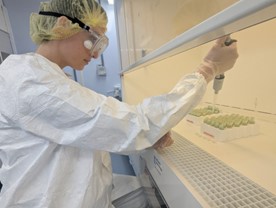
Cheever鈥檚 project is pioneering in its application of modern analytical techniques to ancient remains. She is working with Dr. Gwyneth Gordon at Arizona State University to quantify mercury concentrations in the bones of individuals who labored in these hazardous conditions. 鈥淥ld bone can be degraded, and this is a large reason why I wanted to do this pilot study,鈥� Cheever explained. 鈥淭his method, once refined, will be broadly relevant to bioarchaeological research, the evolutionary study of heavy metal uptake in biological organisms, and the environmental cycling of mercury over time.鈥�
The method Cheever uses involves careful analysis to ensure the mercury detected is from the bones themselves, not from environmental contamination. This meticulous approach is key to understanding the true impact of mercury on the health of these communities.
The implications of Cheever鈥檚 work extend beyond historical analysis. By examining how mercury exposure affected indigenous populations in the past, her research provides insight into the long-term health consequences of toxic working conditions. 鈥淣ot only are we learning about the specific indigenous population involved, but we’re also learning about how laboring and toxic environments harm communities,鈥� said Tung. 鈥淚t sets the groundwork for larger conversations about those kinds of working conditions, which are still relevant today.鈥�
Looking Ahead: Expanding the Timeline
Looking ahead, Cheever and Tung hope to extend this research further into the past to study mercury use among pre-colonial Peruvian populations. While mercury mining for silver amalgamation began with the Spanish, indigenous people used mercury-rich cinnabar for artistic and ritual purposes long before colonial contact. 鈥淲e don’t fully understand if that was harmful to their health in any way,鈥� Tung noted. 鈥淧revious research suggests it is not very harmful, but we just don’t know enough about it鈥攊t is a big black box right now.鈥�
Cheever鈥檚 work is a testament to the power of collaboration in scientific research. Dr. Gordon at ASU has played a crucial role in training Cheever in advanced techniques, enabling this innovative study. 鈥淕ordon has been a great partner in particular,鈥� said Tung. 鈥淚t takes a lot of us working together and lots of institutions coming together.鈥� The support from the Evolutionary Studies Initiative has been pivotal in fostering these cross-university partnerships, allowing Cheever to push the boundaries of what is known about the past.
Through this project, Sylvia Cheever is not only advancing the field of anthropology but also giving voice to those whose stories have long been overshadowed. Her work shines a light on the resilience and struggles of indigenous communities during a time of profound change. As Cheever continues to explore the bones of the past, she offers a new lens on history鈥攐ne that reveals the enduring impact of colonialism and the hidden narratives of those who lived through it.