Recap of ESI Seminars (Fall 2024)
The Evolutionary Studies Initiative (ESI) Seminars last semester highlighted diverse and interdisciplinary approaches to understanding evolution. The speakers showcased research spanning behavior, genetics, physiology, and ecological systems, presenting evolution鈥檚 role in shaping life on Earth. From Anne Yoder鈥檚 exploration of speciation and conservation in Madagascar, to Ken Catania鈥檚 extraordinary look at predator-prey dynamics in emerald jewel wasps, each seminar contributed to a rich mosaic of evolutionary science. Four our annual retreat, Martha Mu帽oz and Caiti Heil delved into the mechanisms of adaptation at both physiological and genetic levels, while Amy Goldberg emphasized the genetic and evolutionary implications of recombination and hybrid vigor. Together, these seminars illuminated the complexities and nuances of evolution and its relevance across scales and species.
Anne Yoder
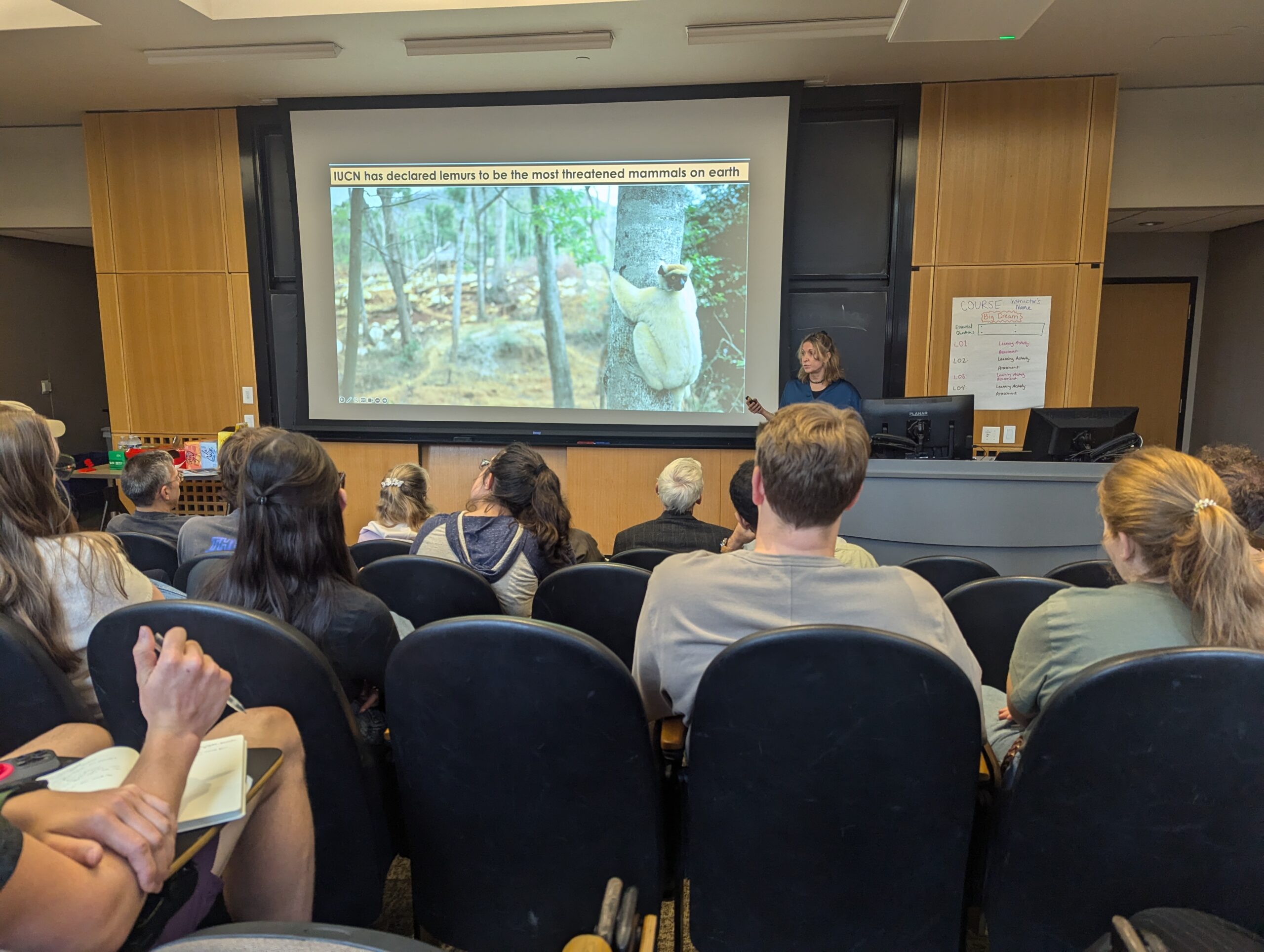 Anne Yoder鈥檚 seminar provided insights into Madagascar鈥檚 exceptional biodiversity, using lemurs as a focal point to study evolutionary mechanisms driving speciation and adaptation. Yoder emphasized the importance of Madagascar as a natural laboratory for testing hypotheses about island biogeography and diversification. A highlight of her work was demonstrating how geographic isolation and ecological niches contributed to lemur radiation, a process influenced heavily by climatic fluctuations. This research underscores the value of conservation in Madagascar, where species face pressures from habitat destruction and climate change.
Yoder also presented new molecular phylogenetic approaches that integrate genomics with geographic data. This allowed her to resolve long-standing questions about lemur evolutionary history, including how ancient dispersal events shaped their distribution. Yoder concluded with a call to action: studying Madagascar鈥檚 biodiversity is not only critical for evolutionary science but also urgent for conserving these species before they are lost.
Andy鈥檚 favorite quote: 鈥淵ou have to be willing to be surprised and move on. Okay, my past idea was wrong. I was so sure that there would be a western clade and an eastern clade. I spent a lot of time 鈥� weeks maybe 鈥� trying to root the tree such that it would come out that way; and it just was not that way.鈥�
Ken Catania
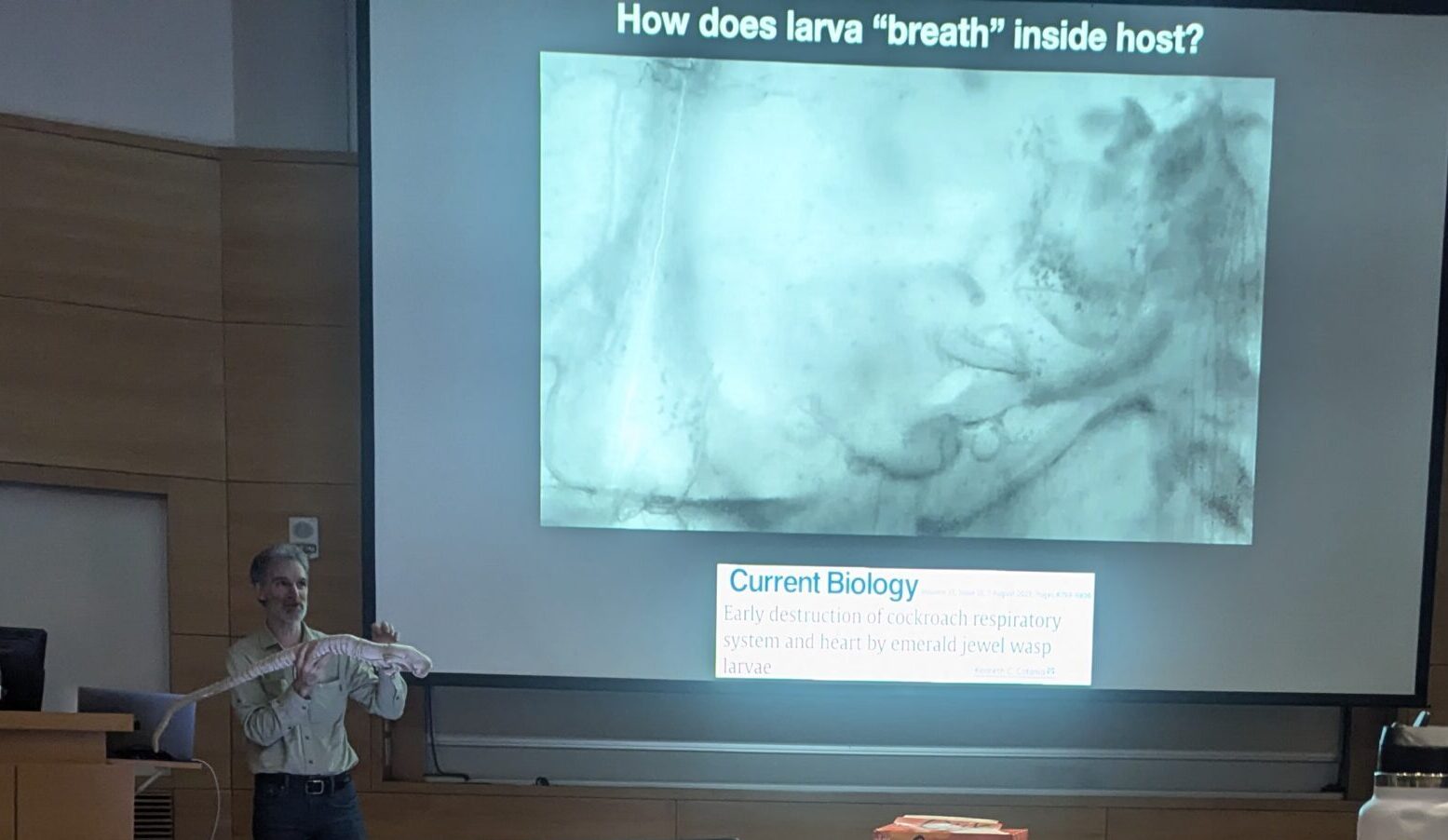 Ken Catania鈥檚 seminar captivated audiences with an exploration of star-nosed moles and emerald jewel wasps, a species whose specialized nose is the most sensitive tactile organ known in mammals. He detailed the mole鈥檚 remarkable adaptations for hunting in subterranean environments, including its rapid touch-based prey detection. Catania emphasized that the mole can identify and capture prey in as little as 120 milliseconds, a feat unmatched by any other mammal.
Another key takeaway was the evolutionary significance of the mole鈥檚 neural wiring. Catania鈥檚 work showed how the star鈥檚 structure is mirrored in the mole鈥檚 brain map, illustrating how evolution fine-tunes sensory systems. He concluded by discussing predator-prey dynamics, with a focus on how extreme adaptations like the star-nose can influence ecological interactions.
Andy鈥檚 favorite quote: “After being stung, the cockroach is still ambulatory鈥攊t can walk, fly, and even swim鈥攂ut it鈥檚 pacified. It鈥檚 often in the literature called ‘zombie鈥�. The zombie cockroach bends entirely to the will of the wasp.”
Martha Mu帽oz
 Martha Mu帽oz鈥檚 seminar explored behavioral and physiological evolution in lizards, particularly in thermally diverse environments. Her research highlighted how behavior serves as a buffer against environmental changes, potentially slowing evolutionary rates in some traits. Mu帽oz emphasized the importance of examining evolution at the intersection of physiology, behavior, and environment to understand adaptation across habitats.
Andy鈥檚 favorite quote: 鈥淗igh-elevation anoles were up to seven degrees Celsius more cold-tolerant than their low-elevation counterparts, showcasing intense physiological contrasts within a lineage.鈥�
Caiti Heil
 Caiti Heil examined genetic variation and hybridization in Saccharomyces yeast, offering insights into how hybrids retain advantageous traits from both parent lineages. Her research underscored how hybrid vigor arises through selective pressures in fluctuating environments, illustrating the genetic mechanisms underlying adaptation.
Andy鈥檚 favorite quote: 鈥淲e focused on the Saccharomyces yeast; they live in lots of really interesting environments, including many of our fermented foods and beverages鈥� We evolved hybrids for hundreds of generations under selective pressures like nutrient limitations and temperature.鈥�
Amy Goldberg
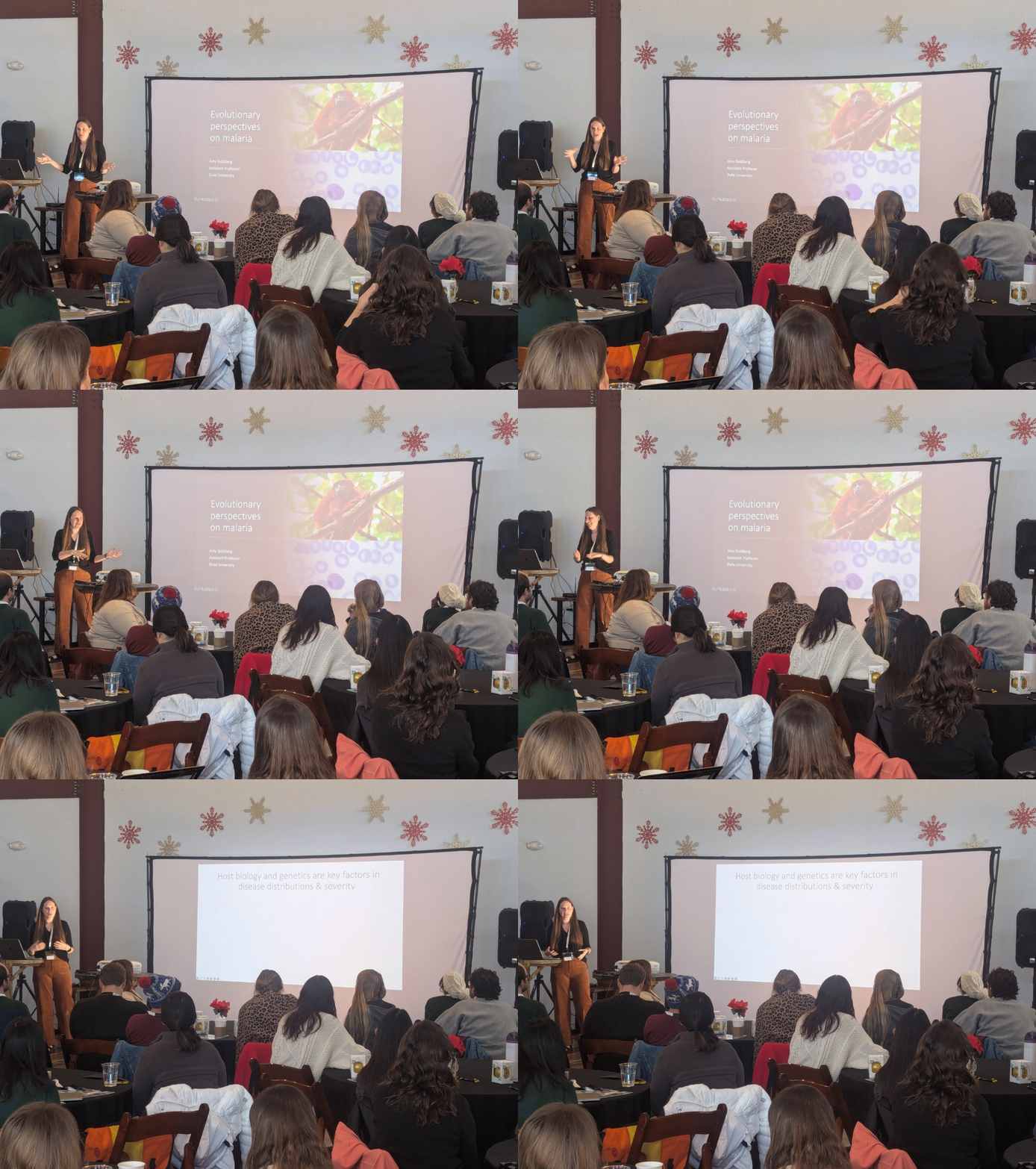
Amy Goldberg鈥檚 seminar focused on recombination and hybrid vigor, emphasizing the role of genetic recombination in accelerating adaptation. Using data from diverse populations, she demonstrated that recombination hotspots can fuel evolutionary potential, particularly in challenging environments. Her work bridged evolutionary theory with applied genetics, showing how these mechanisms can inform conservation strategies.
Andy鈥檚 favorite quote: 鈥淭he rise of agriculture has changed our interactions with animals and parasites, allowing us to see different dynamics and consequences.鈥�
The fall ESI seminars underscored evolution鈥檚 vast scope, from molecular mechanisms in yeast and recombination to behavioral adaptations in mammals and reptiles. While each speaker approached the topic from unique angles, common themes emerged: the interplay between environment and evolution, the role of adaptation in shaping biodiversity, and the urgency of applying evolutionary knowledge to conservation. Together, the seminars highlighted evolution鈥檚 power to explain life鈥檚 complexity and its relevance to addressing modern challenges in biodiversity and beyond.
is the Braxton Craven Distinguished Professor of Evolutionary Biology at Duke University. is the Stevenson Professor of Biological Sciences at 91黑料网. is an Assistant Professor of Ecology and Evolutionary Biology at Yale University. is an Assistant Professor of Biological Sciences at North Carolina State University. is the David M. Goodner Assistant Professor of Evolutionary Anthropology at Duke University but soon to be at UCLA.